
It may not always be easy to tell when memory changes are part of normal aging or something more. Many families begin to notice small shifts over time, such as confusion, missed routines, or changes in behavior.
When those changes begin to affect safety or the ability to manage at home, it may be time to consider whether additional care could help.
At Clermont Park in Denver, Colorado, we often meet families during this stage. They are trying to understand what is changing and what kind of care will feel right for their loved one.

When Memory Changes Go Beyond Normal Aging
It’s common to notice small changes in memory with age. Forgetting a name, misplacing keys, or needing a reminder now and then can happen to anyone.
Concern tends to grow when those moments begin to happen more often or start to affect familiar routines.
Over time, families may notice differences like these:
| Normal Aging | Dementia |
| Forgetting a name but remembering it later | Consistently forgetting recently learned information |
| Missing an appointment occasionally | Difficulty keeping track of appointments or important dates |
| Misplacing items but retracing steps to find them | Placing items in unusual locations and not being able to find them |
| Pausing to find the right word but continuing the conversation | Frequently having trouble following conversations or finding words |
| Making a mistake once in a while | Difficulty completing familiar daily tasks |
These changes are not always obvious at first. They tend to develop gradually, which is why many families notice a shift over time rather than a single clear moment. According to the Alzheimer’s Association, one of the earliest signs is memory loss that begins to interfere with routines and independence.

What Is Dementia and How Does It Affect Daily Life?
Dementia is not a single disease. It is a general term used to describe changes in memory, thinking, and reasoning that begin to affect how a person functions.
In the early stages, dementia may look like mild forgetfulness or occasional confusion. Over time, those changes may begin to affect communication, decision-making, and the ability to manage routines.
Families often begin to notice things like:
- Repeating questions or stories
- Difficulty following conversations
- Trouble managing medications or daily routines
- Increased confusion in familiar places
- Changes in mood, personality, or behavior
These changes are not simply part of getting older. They reflect how the brain is processing information differently. Understanding this can help families make sense of what they are seeing and begin to consider what kind of care might be helpful.
How Do You Know When Memory Care Is Needed?
For many families, this question comes up gradually. Things start to feel more difficult, less predictable, or harder to manage at home.
Dementia and Alzheimer’s are progressive conditions, meaning needs often change over time. What feels manageable at one stage may require a different level of support later on. Because of this, the need for memory care often exists on a continuum.
There are often supportive options to explore before moving to a memory care community. Some families choose to add support through adult day programs, such as Clermont Park’s Adult Day Program, which provides a structured, engaging environment during the day, while others explore in-home care services, such as those offered by Rhythms Home Care, which bring assistance and companionship into a familiar home setting.
Over time, families may begin to consider whether a more structured environment could provide greater consistency, engagement, and support that aligns with those changing needs, such as a memory care community.

What Is a Memory Care Community?
A memory care community, like the one at Clermont Park, is a specialized environment designed for individuals living with Alzheimer’s or other forms of dementia.
These communities provide individualized, enriching support in a setting that feels structured, safe, and familiar. The focus is not only on care, but also on helping each person stay engaged and connected in ways that are meaningful to them.
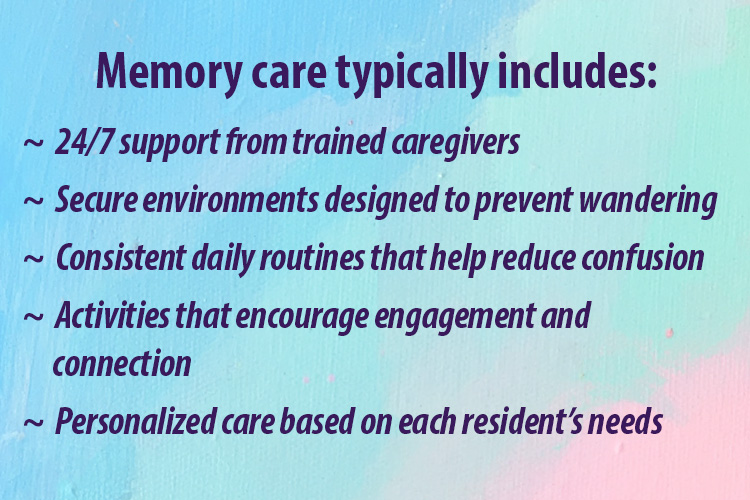
Memory care typically includes:
- 24/7 support from trained caregivers
- Secure environments designed to prevent wandering
- Consistent daily routines that help reduce confusion
- Activities that encourage engagement and connection
- Personalized care based on each resident’s needs
At Clermont Park in Denver, Colorado, memory care is designed to support the whole person. Our Rhythms Dementia Services approach focuses on understanding each individual’s preferences, history, and daily patterns, allowing care to be tailored in a way that reflects who they are. Team members receive specialized training in dementia care, helping them communicate effectively and respond to changing needs.
With an emphasis on personalized support, meaningful engagement, and strong connections, residents are supported in a way that honors their individuality while helping them feel comfortable and supported as their needs evolve.

What Happens After Moving to Memory Care?
One of the most common questions families have is what each day will look like after a move.
In memory care, having a steady routine can help reduce confusion and create a greater sense of comfort. There is also an emphasis on helping each person stay engaged and connected in ways that feel meaningful.
At Clermont Park, days are thoughtfully structured to feel steady and familiar. Residents share meals, spend time connecting with others, participate in guided activities, and have space for rest, all within a supportive environment designed to reduce confusion. With personalized care and opportunities for engagement, each day is shaped around the individual, helping residents feel more at ease in their surroundings.
When Is the Right Time to Explore Memory Care?
There is rarely a single moment that makes the decision clear. More often, it is a series of changes that become harder to manage over time.
If caregiving is becoming overwhelming or safety is becoming a concern, it may be time to begin exploring options, such as:
- Adult Day Programs
- In-home Care
- Respite Stays
- Full-time Memory Care
It’s important to remember that memory care is not about taking independence away. It is about creating the right environment so your loved one can feel safe, comfortable, and cared for.
Explore Memory Care at Clermont Park
If you are starting to ask these questions, you are not alone. Many families find themselves in this same place, trying to understand what is changing and what to do next.
Located in Denver, Colorado, Clermont Park offers memory care focused on creating consistency, connection, and a sense of ease through each stage of the journey. If you have questions or would like to schedule a visit, our team is here to listen, answer questions, and help you explore what feels right.